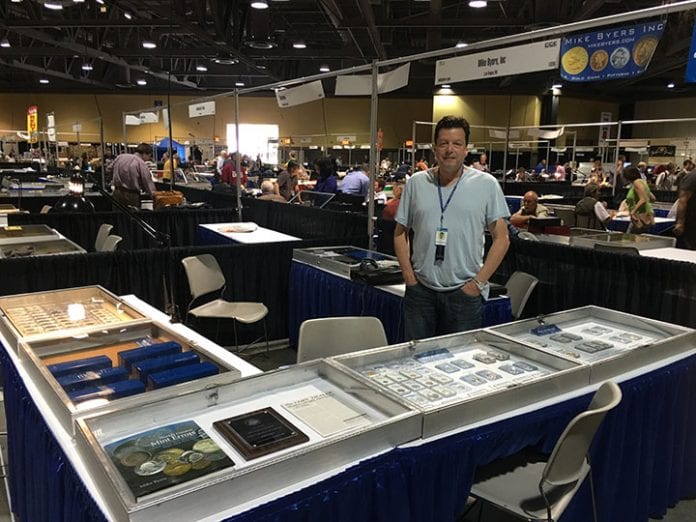
One of the world’s most famous numismatists is undoubtedly Mike Byers. He has been in this line of work for 40 years. Among dealers working in the United States of America, he is the largest one. This man is renowned for handling U.S. Gold Coins, Patterns, and Rarities and his work is certified by both PCGS and NGC. Dedication to the job can be seen through the fact that he has attended every major coin convention, where he handles significant coin collections. His inventory is extensive, and he is always looking to expand it by adding new coins and collections through ‘want lists.’
From 2000 to 2006 Byers has worked as a consultant at ANACS for Mint Errors. While at Mint Errors he became editor and publisher of Mint Error News Magazine and the Mint Error News Website. The latter one was founded in 2003. In 2009 he published his first book named World’s Greatest Mint Errors which brought him the NLG Award for Best World Coin Book. This book can be bought on amazon.com. In 2016 he featured on Fox News and gave an interview on the subject of mint errors.
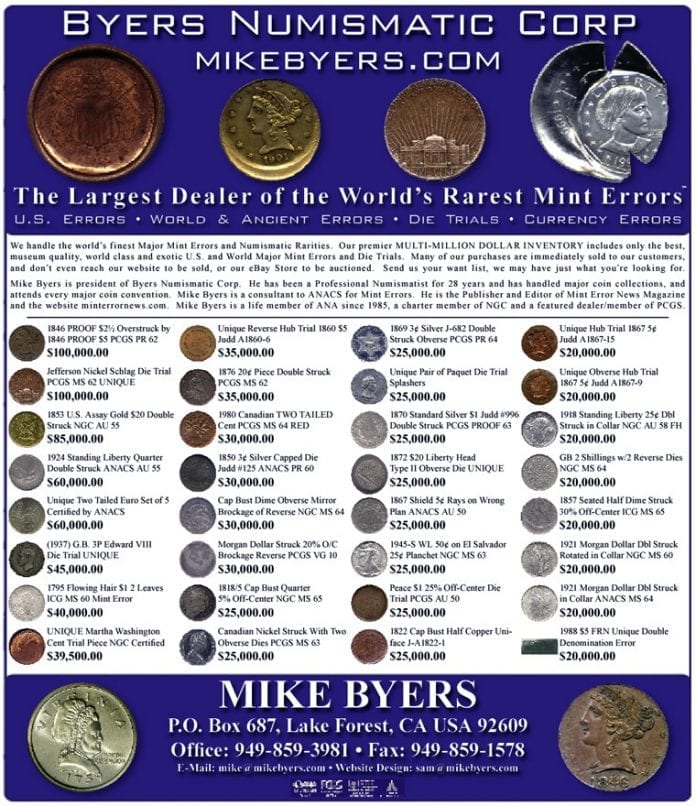
Mike Byers became a member of ANA in 1985, and he’s a life member, while at NGC he holds charter membership, and is featured dealer/member of PCGS. In addition to these memberships, Mike is also a member of Central States Numismatic Society, the Florida United Numismatists and a member of ICTA. The list doesn’t end here as Byers is also member A71 in the Certified Coin Exchange (CCE) and a member of CDN Exchange (BYRS).
His long history in coin business started early, as he attended his first coin show when he was only six. At 17 he already had issued his first coin catalog. At the U.S. Gold Coins, this man is regarded as Market-Maker and a dealer in major mint errors. He is an owner of various numismatic rarities, and because of this, Mike Byers featured on the front page of Coin World. Byers also wrote articles for The Coin Dealer Newsletter. As a contributor, he has published work at CoinLink & CoinWeek. He also provided assistance to Coin facts and PCGS on the subject of mint errors on their websites. If you are interested to see his rarities you can do this at the ANA, Central States, FUN show and the Long Beach Coin Expo.
In addition to working with coins, Mike Byers also deals in fine art owning various items by the renowned artists including Leroy Neiman original oils. He primarily deals with oil and acrylics on canvas and board, bronzes, watercolors and mixed media artwork.